Begin with the approved arrangements
Ask who owns the emergency plan and which version applies to the location. Establish the scope of your round before checking equipment or speaking with workers. Different workplaces may need different arrangements for fire, medical emergencies, chemical releases, severe weather, security incidents or other events. The purpose of this walkthrough is to identify gaps for review, not to design an emergency response from a generic list.
If an emergency is happening, stop the routine inspection and follow the local emergency procedures. This website and its contact tool are not emergency reporting channels. Do not delay notification while writing an observation, and do not enter a hazardous area to gather evidence. Only trained, authorized people should undertake specialist emergency actions within the arrangements established for the workplace.
Check whether information can be found
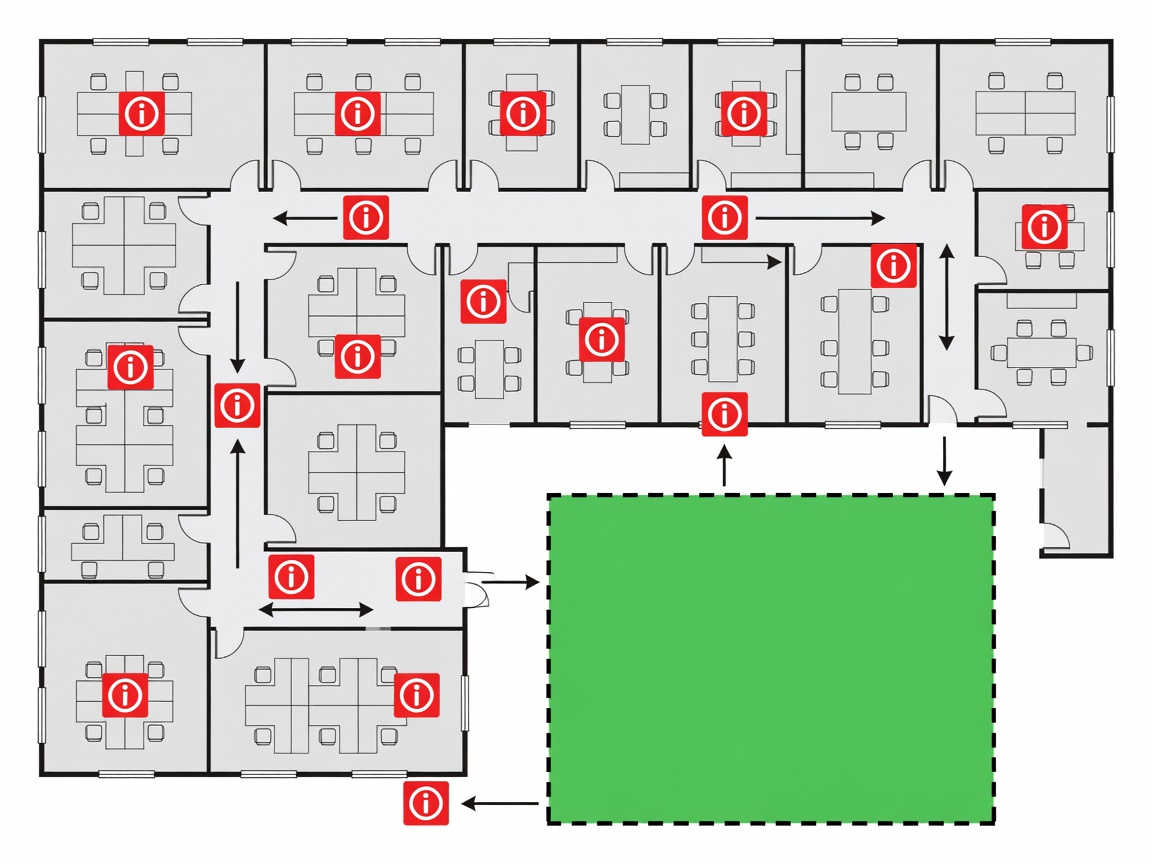
Look at where emergency information is displayed and how people who do not normally use that area would find it. Ask whether notices reflect the current layout, relevant contact roles and approved reporting arrangements. Outdated room names, moved work areas and obsolete contact details can make an otherwise clear notice misleading. Record the exact discrepancy and identify the role authorized to correct it.
Consider language, literacy, accessibility and working patterns. A notice at the main office may not help a worker on a night shift or a visitor entering elsewhere. Ask how temporary workers and contractors receive relevant instructions. Do not conduct a surprise knowledge test or blame individuals for unclear information. A conversation about where to find the approved instructions can reveal a system gap without becoming an informal drill.
Observe access, not technical performance
From authorized areas, notice whether emergency equipment and information points are visibly obstructed or damaged. Report missing identification, blocked access or other concerns to the designated responsible person. Do not discharge an extinguisher, activate an alarm, operate an emergency shower or interrupt a system to check whether it works. Required inspections, testing and maintenance need the correct competence, authorization and records.
A service label can be useful information, but it is not a complete statement about equipment suitability or current performance. Likewise, the presence of a first-aid kit does not establish that its contents match assessed needs or that trained assistance is available. Ask who manages the program and how concerns are reported. Follow the site’s approved inspection process if your role includes those checks.
Include people who may need assistance
Ask how the emergency arrangements account for workers and visitors who may need support. This can involve mobility, sensory, communication or temporary needs, as well as the practical realities of lone or remote work. Planning should involve the affected people through an appropriate, respectful process. Do not record medical details in a general inspection notebook or display personal assistance information on a public notice.
Check who coordinates with landlords, other occupiers or building management where responsibilities are shared. An organization’s internal plan may depend on building alarms, shared stairs or an external assembly area. A mismatch between these arrangements needs coordinated review. Do not assume another occupier has checked a shared responsibility merely because the area lies outside your normal work zone.
Use exercises and changes as learning points
Ask how findings from authorized drills, incidents and plan reviews are tracked. Record whether a previous action has an owner and whether closure has been verified. Changes in staffing, layout, processes or hazardous materials can alter what is needed. A calendar reminder to review a document is useful, but it should not replace review when significant changes occur.
- Observation
- The emergency information board names a meeting area that changed during recent building work.
- Action / owner
- Emergency planning lead to confirm the approved arrangement with building management and update affected information.
- Verification
- Check consistent information across relevant locations and confirm affected teams receive the authorized update.
Close the observation after the approved change has been made and communicated, with evidence appropriate to the issue. An updated poster does not demonstrate that an entire emergency plan is effective. Escalate any remaining uncertainty about capacity, assistance, equipment or responsibilities to the competent people who manage those arrangements.
References for responsible review
- OSHA: Emergency Preparedness and Response — workplace planning resources.
- OSHA: 29 CFR 1910.38 — U.S. emergency action plan provisions where applicable.
- OSHA: Medical and First Aid — workplace first-aid considerations.
- Ready.gov: Business — U.S. business preparedness resources.
- HSE: First aid at work — Great Britain needs-assessment guidance.